Aït Ben Haddou
Complete guide to planning your visit
Before You Visit the Ksar
Visit duration : 1 H – 3 H
Admission : fee
Access points : Either through the gardens to the right of the ksar or via the footbridge to its left.
Distance from Ouarzazate : 40 minutes by road
Best time to visit : Early morning or late afternoon
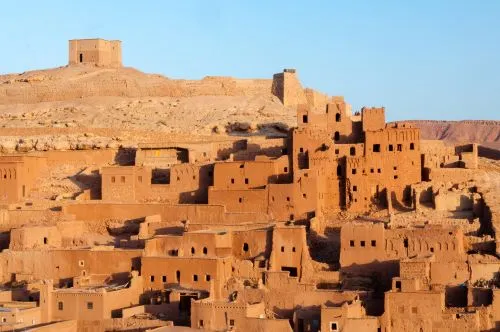
What to do in Aït Ben Haddou?
- Explore the ksar and its narrow lanes.
- Visit a traditional family house.
- Climb to the granary and enjoy the panoramic views.
- Walk or ride horseback along the riverbed.
- Enjoy a meal or a mint tea at Tawesna Garden.
- Watch the sunset over the earthen silhouette of the ksar
- Discover the House of Oral Tradition and its Berber carpet exhibition.
Read the full guide :
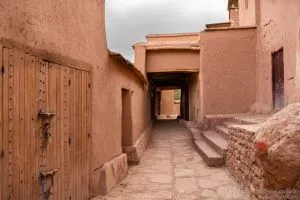
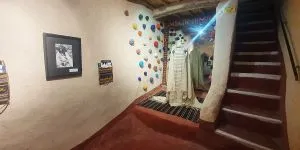
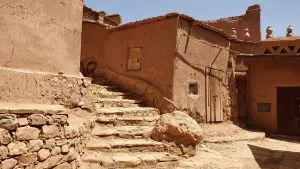
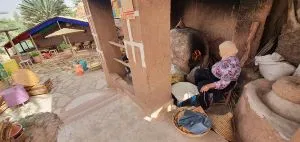
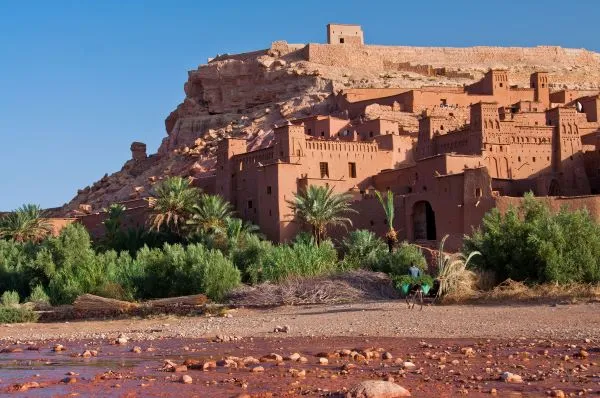
Planning your visit to Aït Ben Haddou
- Admission and opening hours
- Getting there
- Parking
Read the full guide :
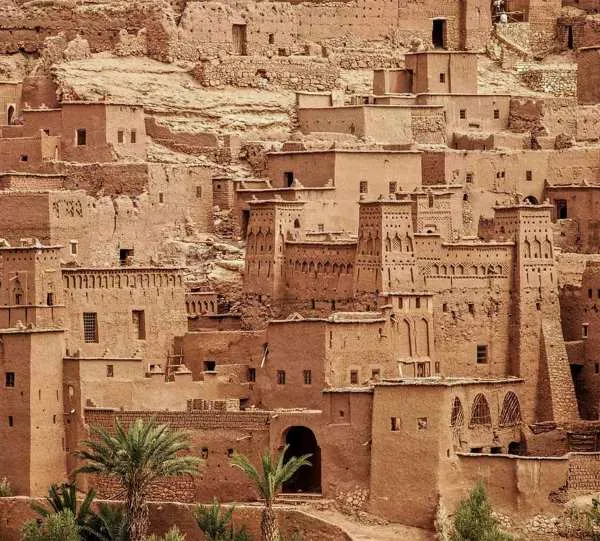
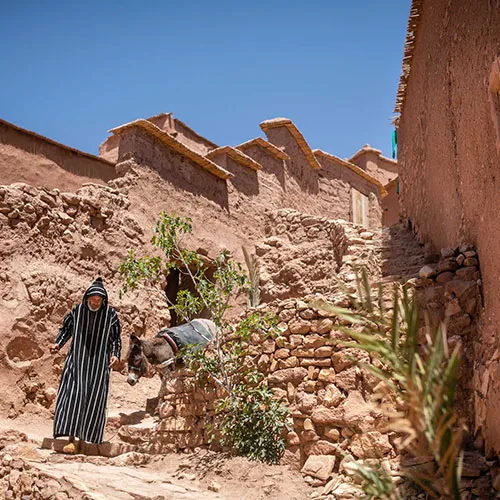
Why is Aït Ben Haddou famous?
- A former stop on the trans-Saharan caravan routes.
- A landmark of Amazigh earthen architecture.
- A UNESCO World Heritage Site.
- A celebrated film location.
Read the full article :
How to get to Aït Ben Haddou
From Ouarzazate
- Distance : 30 km
- Travel time : 40 minutes
- Route : N9 and the scenic P1506 route
- Transport : Car or shared taxi from Ouarzazate bus station
- Departure time : Flexible
From Marrakech
- Distance : 180 km
- Travel time : 3.5 hours
- Route : N9 via the Tizi n’Tichka Pass and the scenic P1506 route through Telouet
- Transport : Car or private/shared taxi
- Recommended departure : Around 8:00 am
Where to stay near Aït Ben Haddou?
- Staying in or close to the ksar.
- Staying in a nearby village.
- Staying in the Ounila Valley.
- Staying in Ouarzazate.
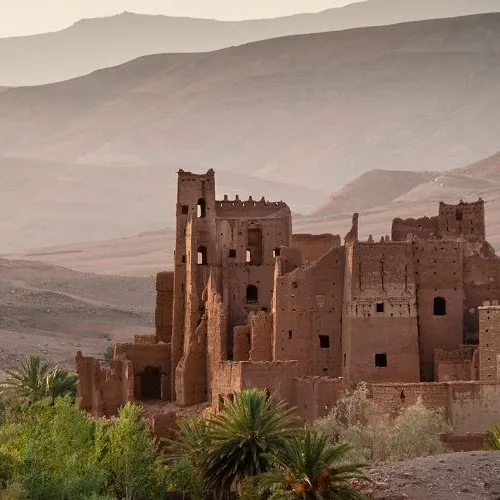
Beyond Aït Ben Haddou
Extend your exploration of Aït Ben Haddou with a day-long tour led by a local guide through the Ounila Valley and on to the kasbah of Telouet, following in the footsteps of Jacques Majorelle and the history of the Glaoua.
Visit the region’s largest palm grove, in Skoura, or experience life in an oasis in Fint.
To learn more about southeastern Morocco, visit: sudestmaroc.com.
Aït Ben Haddou : explore further
Why is it called Aït Ben Haddou?
Behind this now-famous name lies a fascinating story, still whispered by the stones of the ksar.
Aït Ben Haddou: what is a ksar?
The term ksar refers to a fortified village typical of south-eastern Morocco.
Why is Aït Ben Haddou a UNESCO World Heritage site?
Listed as a UNESCO World Heritage Site since 1987, Aït Ben Haddou is one of Morocco’s finest examples of earthen architecture.
According to local tradition, the story begins with a Christian princess …
The ksar of Aït Ben Haddou appears to have roots that stretch far deeper into the past than is commonly believed.
Frequently asked questions about Aït Ben Haddou
Is Aït Ben Haddou worth visiting?
Yes, provided you know what to expect. Aït Ben Haddou is one of Morocco’s most remarkable historic earthen villages and a UNESCO World Heritage Site. However, many visitors only spend a short time in the busiest parts of the ksar and leave feeling they have missed something. Beyond the main streets lie traditional houses, local initiatives and the landscapes of the Ounila Valley. Extending your visit towards Telouet, the former stronghold of the Glaoua family, or exploring the valley that inspired some of Jacques Majorelle‘s earliest paintings often reveals a richer and more rewarding side of the region.
Do you have to pay to visit Aït Ben Haddou?
No. Access to the ksar of Aït Ben Haddou is free. However, some attractions and traditional houses open to visitors charge a small entrance fee.
How long does it take to visit Aït Ben Haddou?
Most visitors spend between one and three hours exploring Aït Ben Haddou. Those wishing to visit traditional houses, enjoy a meal, or spend time discovering the surrounding area may choose to stay longer.
What is the best time to visit Aït Ben Haddou?
Early morning and late afternoon are generally considered the best times to visit Aït Ben Haddou. The temperatures are more pleasant, the light is softer, and the colours of the earthen architecture are particularly beautiful. Midday can be very hot, especially during the summer months.
How far is Aït Ben Haddou from Marrakech?
Aït Ben Haddou is located around 180 km from Marrakech. The journey takes approximately three and a half hours by road via the Tizi n’Tichka Pass.
Where can you park near Aït Ben Haddou?
Visitors can park free of charge along the road in the new village. Several supervised car parks are also available nearby for a small fee.
Can you visit Aït Ben Haddou without a guide?
Yes. The ksar can easily be explored independently. However, a guide can help visitors better understand the history, architecture and local traditions associated with the site.