What to do in Aït Ben Haddou ?
Visiting Aït Ben Haddou is about more than simply wandering through its narrow streets. It is an encounter with a fortified village, a way of inhabiting the landscape, organising community life and passing knowledge from one generation to the next. Some experiences offer a deeper and more personal understanding of this reality than others.
Here are a few ways to discover a different side of Aït Ben Haddou and allow the place to tell its own story.
Approaching the ksar: the bridge or the garden path
The discovery of Aït Ben Haddou begins before you even enter the village. Two routes lead to the ksar.
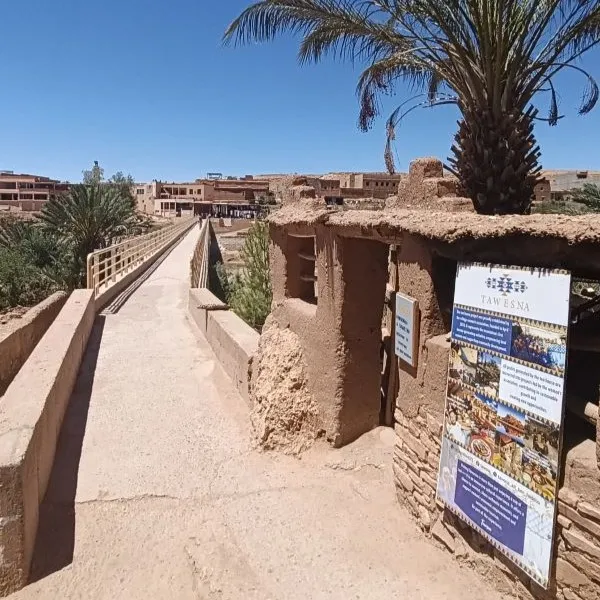
The first follows the pedestrian bridge across the riverbed. It is the most direct approach and offers the classic view of the fortified village’s distinctive silhouette.
The second runs alongside the gardens and cultivated fields situated below the ksar on its right. Less frequented and more discreet, it gradually reveals the relationship between the village, water, agriculture and the surrounding landscape.
Both routes are public and free of charge, and they complement each other perfectly. They offer two different ways of experiencing the same place: one monumental, the other more intimate.
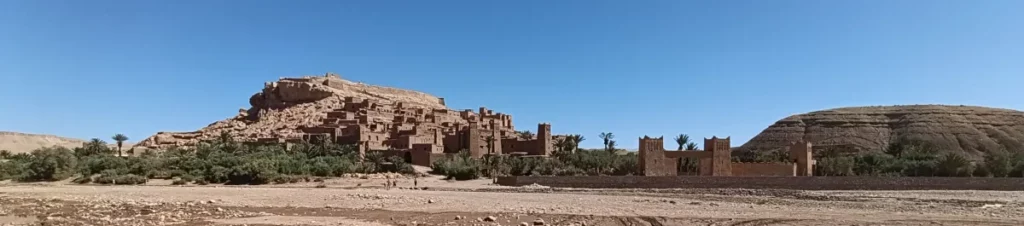
Climbing to the communal granary for the view and the story
The highest point of the ksar offers sweeping views across the Ounila Valley and the surrounding mountains. Many visitors make the climb for the panorama alone. Yet the significance of the place extends far beyond the landscape.
From this vantage point, the organisation of the village becomes easier to understand: the layout of the houses, the narrow streets, the defensive walls, the gardens and the access routes. The communal granary also serves as a reminder of the importance of cooperation, storage and mutual support in the oasis communities of southern Morocco.
The view is spectacular, but it tells a story as well.
Wandering through the streets of the ksar
The streets of Aït Ben Haddou are often narrow, winding and sometimes covered. They provide shade from the sun, organise movement through the village and connect its different spaces.
Taking the time to wander through them reveals the details of the earthen architecture, old wooden doors, vaulted passageways and unexpected views that suddenly open onto the surrounding landscape.
Beyond the façades, the organisation of the ksar gradually begins to reveal itself.
A lire : Telouet: Cradle and Stronghold of the Lords of the Atlas
Stepping inside an inhabited family home
Some families open their homes to visitors in exchange for a modest contribution. These visits provide access to spaces that cannot be seen from the streets: inner courtyards, living areas, storage rooms and rooftop terraces.
More importantly, they offer a deeper understanding of how people once lived within the ksar and how some families continue to care for and maintain this heritage today.
They are also one of the most direct ways to support the local community.
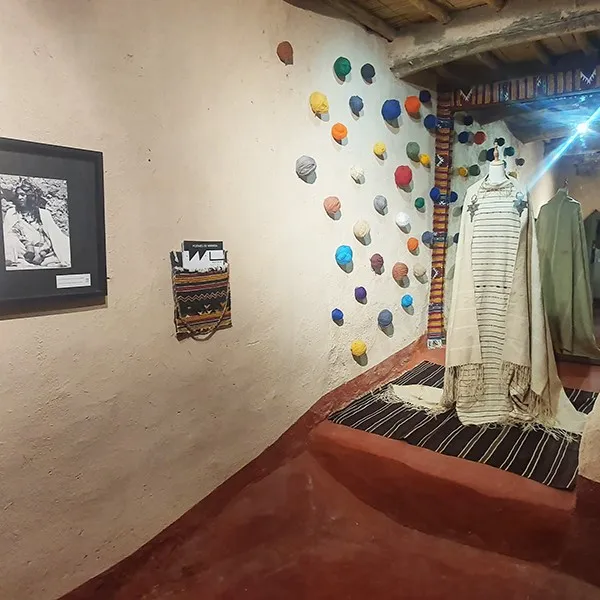
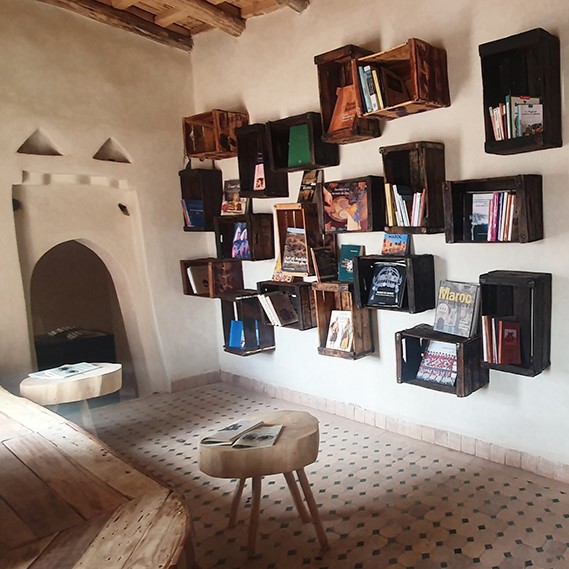
Discovering the Maison de l’Oralité
Little known and discreetly signposted, the Maison de l’Oralité is nevertheless one of the most interesting cultural sites in Aït Ben Haddou.
Through Berber carpets, traditional craftsmanship and the transmission of oral traditions, it offers an understanding of the region that goes far beyond the monument itself.
For visitors wishing to gain a deeper insight into Amazigh culture, the Maison de l’Oralité is often one of the most rewarding stops in Aït Ben Haddou.
Walking along the riverbed
Below the ksar, the path that follows the riverbed offers a different perspective on the village. From here, the relationship between the architecture, the gardens and the surrounding landscape becomes much easier to appreciate.
The walk is particularly pleasant in the early morning or late afternoon, when the light brings out the textures of the earthen buildings and the colours of the valley.
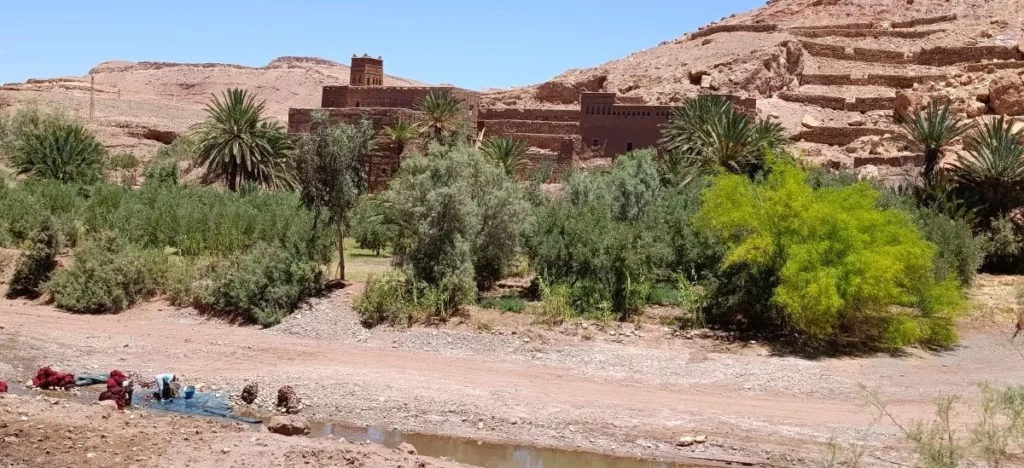
Exploring the surrounding area on foot or horseback
Aït Ben Haddou is more than its ksar alone. Several paths lead beyond the village to the surrounding hills and landscapes that have shaped life in the valley for centuries.
Whether on foot or horseback, these outings provide a natural extension to the visit and offer a chance to experience the slower rhythm of travel that once characterised movement throughout the region.
Taking time at the Tawesna Garden
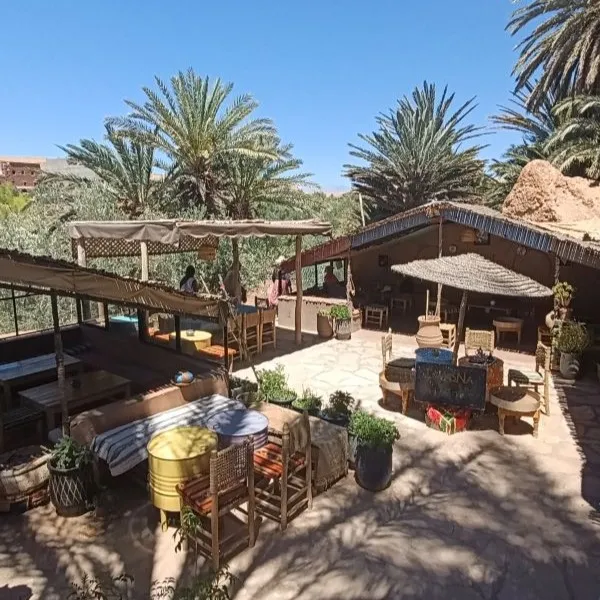
Located at the end of the pedestrian bridge leading into the ksar, the Tawesna Garden provides a shaded place to enjoy a cup of tea or a meal.
Run by a women’s cooperative from the village, it combines hospitality, local cuisine and community engagement. It is also an opportunity to support an initiative that contributes directly to local life in Aït Ben Haddou.
Watching the sunset over the ksar
As the light begins to fade, the earthen façades take on changing shades that are part of the unique beauty of the place.
Stepping back from the village, whether from its outskirts or along the surrounding paths, allows visitors to fully appreciate the silhouette of the ksar within its landscape.
It is often at this moment that one begins to understand why Aït Ben Haddou has continued to captivate travellers, photographers and local people for generations.
Key takeaways
- Aït Ben Haddou is as much about its landscapes and its people as it is about its architecture.
- Family homes, the Maison de l’Oralité and the Tawesna Garden offer a more intimate way to discover the village.
- Taking time, exploring different viewpoints and venturing beyond the most obvious routes often leads to a richer experience of the ksar.