Aït Ben Haddou, the Ounila Valley and Telouet: a day at the heart of High Atlas history
From the UNESCO-listed ksar of Aït Ben Haddou to the landscapes painted by Jacques Majorelle, from the Ounila Valley to the kasbah of Telouet, this full-day excursion connects three places that have played a major role in the history of Morocco’s High Atlas.
Highlights
- Full day
- Easy walk through the valley
- Lunch at a local’s home
- Aït Ben Haddou – Ounila – Telouet
This full-day excursion connects three places linked by a common history: Aït Ben Haddou, the Ounila Valley and Telouet.
Along the way, two remarkable stories emerge. The first is that of the painter Jacques Majorelle, whose works helped introduce the landscapes of south-eastern Morocco to Moroccan and international audiences for the first time during the 1930s. The second is that of the Glaoua, a powerful High Atlas family whose influence shaped Moroccan political history for several decades.
Aït Ben Haddou: understanding the ksar
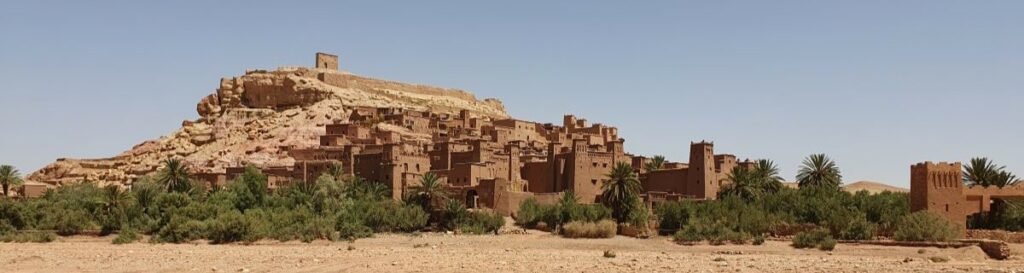
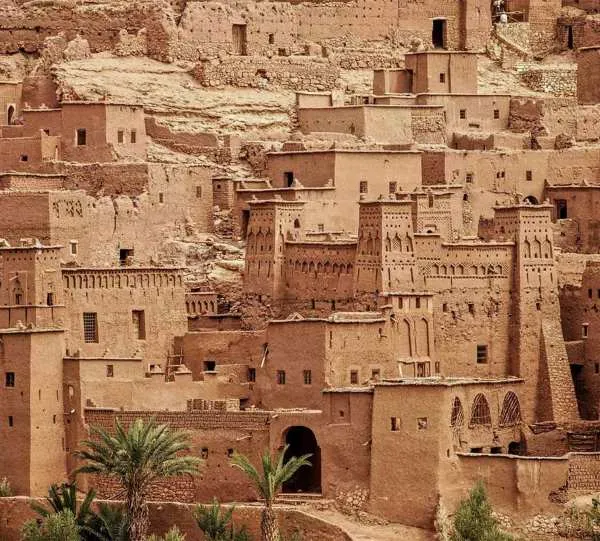
The day begins with a visit to Aït Ben Haddou, the UNESCO World Heritage Site that has become one of the symbols of southern Morocco.
Its earthen streets, communal granary, family houses and viewpoints offer an introduction to the history and organisation of this remarkable fortified village.
After a tea break at Tawesna Garden, the journey continues into the upper Ounila Valley.
The Ounila Valley in the footsteps of Jacques Majorelle
Long before becoming famous for the garden that bears his name in Marrakech, Jacques Majorelle travelled through the valleys of the High Atlas in search of inspiration.
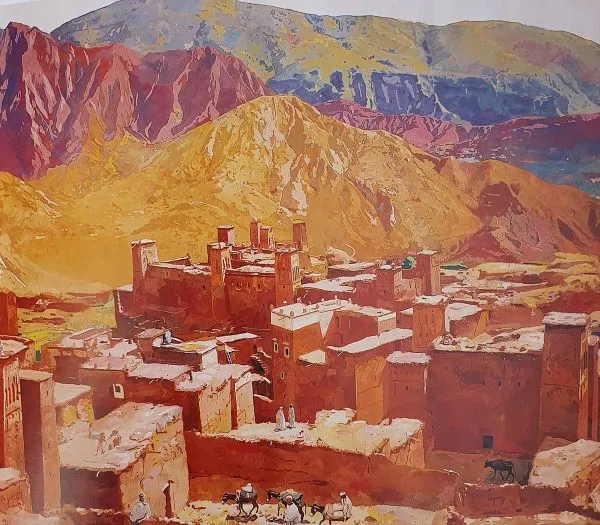
In the early 1930s, he stayed several times in the Ounila Valley, particularly in the village of Amniter. Captivated by its earthen villages, gardens, kasbahs and unique light, he produced a series of paintings that were later exhibited in Casablanca and helped reveal the landscapes of south-eastern Morocco to a wider Moroccan and international audience.
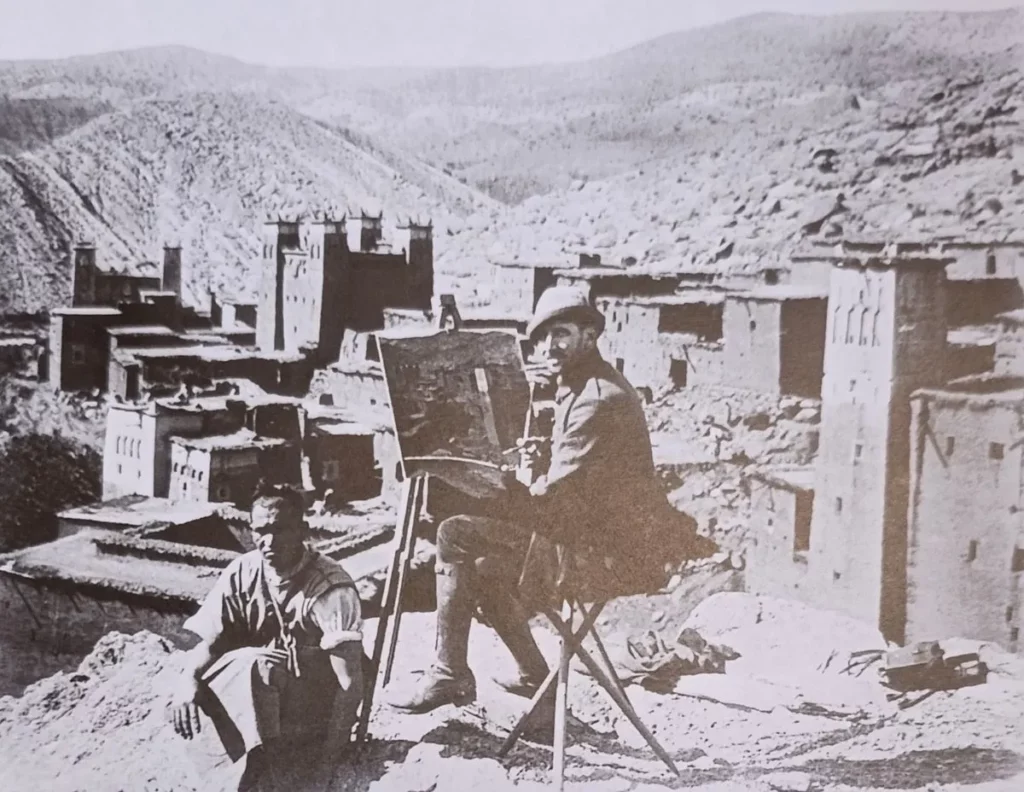
An easy walk offers the opportunity to discover some of the landscapes that inspired him. Reproductions of several of Majorelle’s paintings are displayed facing the very locations he painted, creating a unique dialogue between the artist’s vision and the landscape as it appears today.
Lunch is shared with a local family in a simple and authentic setting.
The route of the Glaoua
Continuing towards Telouet, the excursion follows one of the historic routes that once connected the southern valleys with the plains of Marrakech.
A stop at the former salt mine provides an opportunity to understand one of the principal sources of wealth behind the rise of the Glaoua tribe. Control of trade routes, caravan commerce, political alliances and local resources gradually enabled them to extend their influence across much of the High Atlas.
Telouet and the story of a Moroccan power
The visit to the kasbah of Telouet forms the final chapter of the day.
Former seat of the Glaoua family, it still bears witness to the power they accumulated between the nineteenth century and Moroccan independence.
Among its most influential figures were the Grand Vizier El Madani Glaoui and his brother Thami El Glaoui, Pasha of Marrakech for several decades. Their alliances, rivalries and influence within the Moroccan state played a major role in shaping the country’s modern history.
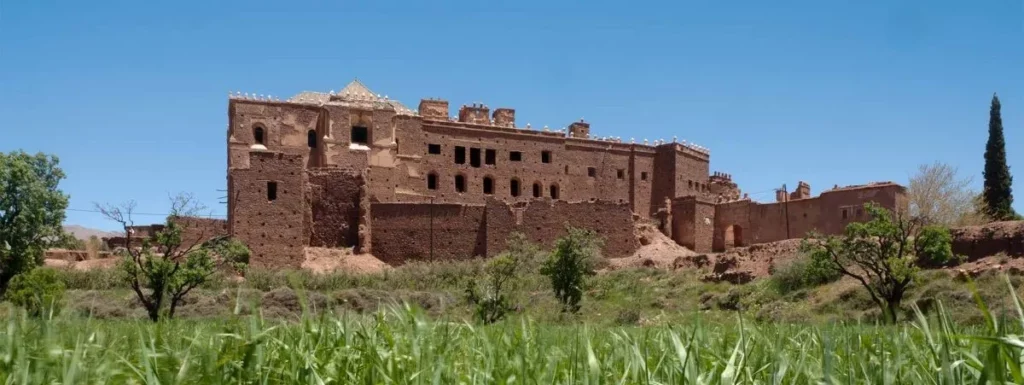
Through its courtyards, reception halls and richly decorated rooms, the kasbah tells the story of a period when Telouet ranked among the most influential centres of power in the kingdom.
More than a series of visits, this excursion offers a deeper understanding of the connections linking Aït Ben Haddou, the Ounila Valley and Telouet. It reveals how a single territory shaped villages, inspired an artist and supported the rise of one of the most influential families in Moroccan history.
Discover : Telouet: Cradle and Stronghold of the Lords of the Atlas
Practical information
This excursion is led by a local guide with an in-depth knowledge of Aït Ben Haddou, the Ounila Valley and Telouet.
To check availability, learn more about the excursion or ask any questions, please use the contact form.
We will be pleased to help you plan your visit.